The Pfizer Hospira Bacteriostatic Water Shortage: Why Demand Is Surging and Why Many Are Comparing It to the Purell Shortage During COVID-19
For years, Pfizer Hospira Bacteriostatic Water was a product that most people outside of hospitals, clinics, and pharmacies had never heard of. Today, it’s one of the most sought-after sterile pharmaceutical products in the country.
Pharmacies are reporting difficulty keeping it in stock, distributors are implementing allocations, and customers are finding themselves calling multiple pharmacies before locating a single vial.
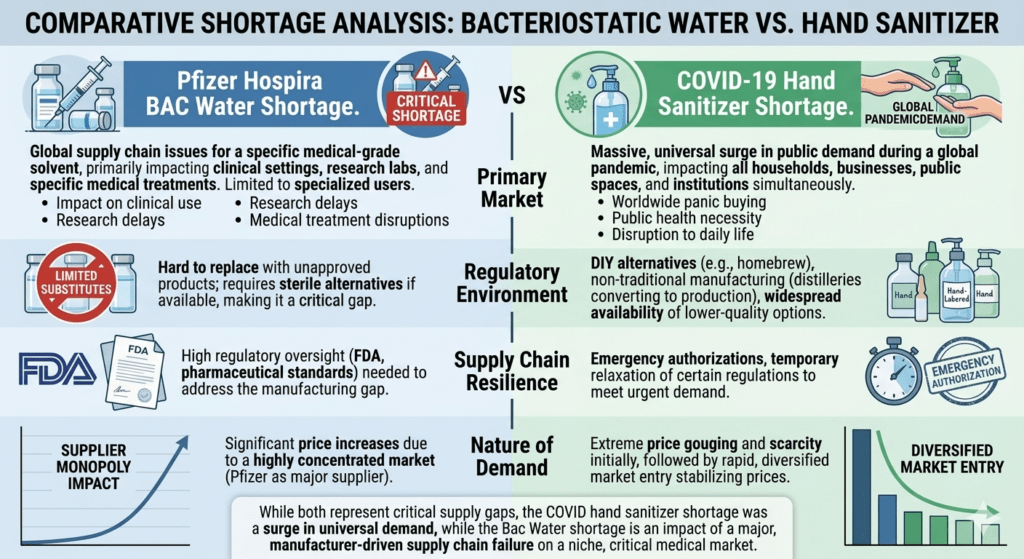
The situation has drawn comparisons to the shortage of Purell hand sanitizer during the COVID-19 pandemic. While the products are entirely different, the market forces behind both shortages share striking similarities.
A Product That Suddenly Went Mainstream
Bacteriostatic water is a sterile diluent containing 0.9% benzyl alcohol that is commonly used to reconstitute medications before administration. For decades, demand remained relatively predictable, coming primarily from hospitals, physician offices, and pharmacies.
Over the past several years, however, the market has changed dramatically.
Injectable wellness therapies and peptides have become far more visible through wellness clinics, telehealth providers, social media, and online health communities. As interest in these therapies has grown, many industry observers believe demand for bacteriostatic water has increased as well. Although Pfizer has not publicly identified peptide demand as the cause of the current shortage, the timing has led many pharmacies and healthcare professionals to view it as a significant contributing factor.
Distributor Allocations
As supplies have tightened, many pharmacies report that major pharmaceutical distributors have placed bacteriostatic water on allocation.
Instead of ordering unlimited quantities whenever needed, pharmacies may receive only a limited number of vials based on available inventory and purchasing history. These allocation programs are designed to distribute scarce inventory across customers until manufacturing and distribution catch up with demand.
For independent pharmacies and smaller healthcare providers, this often means receiving only enough product to meet a portion of their normal needs.
Prices Are Rising Throughout the Supply Chain
Limited availability has also affected acquisition costs.
As inventory becomes more difficult to obtain, pharmacies report paying considerably more than they were just weeks earlier. Higher acquisition costs can eventually translate into higher retail prices, particularly when replacement inventory remains difficult to secure.
This is a familiar pattern whenever demand outpaces supply. As available inventory shrinks, buyers compete for remaining stock, and prices tend to increase until production catches up.
A Familiar Story: The Purell Comparison
Many consumers remember what happened to hand sanitizer in 2020.
Before COVID-19, Purell was an inexpensive household product that could be found almost anywhere. Then demand surged almost overnight. Retail shelves emptied, labs imposed purchase limits, distributors rationed supply, and prices climbed.
The current bacteriostatic water shortage follows a similar economic pattern. While the reasons behind the increased demand are different, the result is familiar: a product that was once readily available has become difficult to find.
Why Manufacturers Can’t Instantly Increase Production
Manufacturing sterile injectable products is a complex process governed by strict quality standards.
Increasing production requires sterile manufacturing capacity, regulatory oversight, quality testing, specialized packaging, and distribution logistics. These are not changes that can happen overnight, even when demand rises rapidly.
As a result, shortages can persist until production capacity and distribution are able to catch up.
What Happens Next?
Most product shortages eventually stabilize as manufacturers increase output and supply chains adjust.
The larger question is whether demand for bacteriostatic water will remain elevated. If injectable therapies and peptides continue to grow in popularity, demand may stay well above historical levels, making bacteriostatic water a more prominent pharmaceutical product than it has been in the past.
Final Thoughts
The Pfizer Hospira bacteriostatic water shortage illustrates how quickly a niche medical product can become a high-demand commodity.
Just as Purell became one of the defining shortages of the COVID-19 era, bacteriostatic water has become increasingly difficult to obtain as demand has expanded beyond its traditional customer base.
Although manufacturers and distributors continue working to meet demand, pharmacies and patients alike are feeling the effects of limited availability. Whether this shortage is temporary or reflects a lasting shift in the market, one thing is clear: bacteriostatic water is no longer a product that quietly sits on pharmacy shelves.
One Response
I hear prices have gone up 65% and will continue to go up