When working with research laboratory materials, selecting the right sterile solution is an important part of maintaining consistent and organized workflows. One commonly discussed laboratory solution is bacteriostatic water.
But what exactly is bacteriostatic water, and why is it used in research environments?
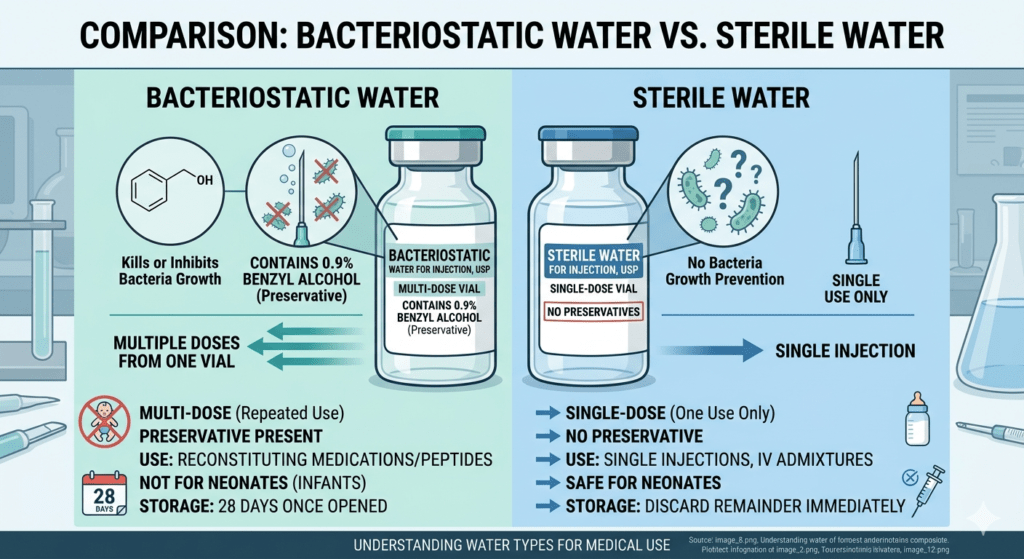
Bacteriostatic water is a sterile water solution that contains 0.9% benzyl alcohol, a preservative that helps inhibit bacterial growth after opening. This feature makes it different from standard sterile water solutions that do not contain preservatives.
In laboratory environments, researchers often require reliable solutions that support controlled preparation procedures. Because bacteriostatic water is designed for multi-dose laboratory applications, it can provide additional flexibility when repeated withdrawals are needed under appropriate sterile handling conditions.
Understanding the purpose, characteristics, storage requirements, and best practices related to bacteriostatic water helps researchers make informed decisions when selecting laboratory supplies.
For high-quality laboratory products, explore the available collection of Bacteriostatic Water products and research supplies: Bacteriostatic Water Products → https://bacteriostaticwaterlab.com/
Bacteriostatic water is a sterile solution made from purified water and 0.9% benzyl alcohol. The benzyl alcohol works as a bacteriostatic preservative, meaning it helps slow the growth of bacteria rather than completely eliminating microorganisms.
The main purpose of adding a preservative is to provide additional protection during repeated access to the same vial.
Unlike single-use sterile water, bacteriostatic water is commonly supplied in multi-dose containers that allow researchers to withdraw portions of the solution when required.
Important characteristics include:
Although bacteriostatic water contains a preservative, proper laboratory practices remain essential.
The preservative does not replace:
Organizations such as the United States Pharmacopeia provide quality standards and guidelines related to pharmaceutical and laboratory materials. United States Pharmacopeia (USP)
The most important difference between bacteriostatic water and sterile water is the presence of benzyl alcohol.
Benzyl alcohol is added because it provides preservative properties that help slow bacterial growth after the vial has been opened.
In research environments where repeated access may be required, this characteristic provides practical advantages.
Benzyl alcohol helps:
However, bacteriostatic water should always be handled according to laboratory protocols.
The preservative does not make contaminated materials safe, and it does not eliminate the importance of sterile technique.
Many beginners confuse bacteriostatic water with sterile water. Although both are sterile solutions, their formulations are different.
| Feature | Bacteriostatic Water | Sterile Water |
|---|---|---|
| Preservative | 0.9% Benzyl Alcohol | No preservative |
| Container Use | Multi-dose applications | Usually single-use |
| Bacterial Growth Control | Helps inhibit growth | No preservative protection |
| Laboratory Flexibility | Higher for repeated withdrawals | Limited after opening |
The biggest difference is the preservative.
Bacteriostatic water is selected when a laboratory requires a sterile solution that can support repeated access, while sterile water may be preferred for applications where preservatives are not suitable.
Bacteriostatic water is used in different research environments where sterile preparation solutions are required.
Researchers may use bacteriostatic water as part of controlled laboratory preparation procedures involving research materials.
Biotechnology laboratories often require consistent preparation methods and reliable supplies to support experimental processes.
Research facilities working in pharmaceutical development may require sterile solutions as part of analytical and development procedures.
Many laboratories depend on quality-controlled materials to maintain consistency throughout research workflows.
The exact application depends on laboratory protocols and research requirements.
One of the main reasons researchers choose bacteriostatic water is its multi-dose capability. Unlike solutions designed for single access, bacteriostatic water is formulated to support repeated withdrawals when handled using appropriate sterile techniques.
This feature can provide several practical advantages in laboratory environments.
Research workflows often require multiple preparation steps. Having a properly maintained multi-dose solution available can help laboratories organize procedures more efficiently.
Instead of opening multiple containers during repeated laboratory activities, researchers can use one properly labd vial according to established handling procedures.
Single-use solutions may result in unused material being discarded after opening. Multi-dose bacteriostatic water can help reduce unnecessary waste in workflows where repeated access is required.
This can support more organized resource management within research environments.
Using reliable laboratory supplies helps researchers maintain consistent preparation methods.
Quality materials, proper storage, and careful handling all contribute to repeatable research workflows.
Because bacteriostatic water is available in sealed vials and multiple sizes, laboratories can select products that fit their specific requirements.
Researchers should always follow manufacturer recommendations for storage and handling.
Proper storage is essential for maintaining the quality of bacteriostatic water.
Even though the solution contains a preservative, correct handling practices remain important.
Bacteriostatic water should be labd according to manufacturer instructions.
Recommended storage practices generally include:
Poor storage conditions may affect container integrity and product quality.
Before using bacteriostatic water, researchers should inspect the vial and packaging.
Avoid using products with:
Maintaining product quality begins before the vial is opened.
Proper handling is essential whenever sterile laboratory materials are used.
Good practices include:
The preservative in bacteriostatic water supports handling procedures but does not replace proper sterile techniques.
For general laboratory safety information, researchers can refer to resources provided by the Centers for Disease Control and Prevention. Centers for Disease Control and Prevention (CDC)
Choosing a reliable supplier is an important part of maintaining laboratory standards.
Not every laboratory supplier provides the same level of product information, packaging quality, or customer support.
When selecting bacteriostatic water, consider the following factors:
A trustworthy supplier should provide information about:
Clear information helps researchers understand what they are purchasing.
Packaging plays an important role in protecting sterile laboratory products.
Look for:
Research laboratories often depend on consistent availability of essential supplies.
A reliable supplier should provide:
Bacteriostatic Water Lab provides bacteriostatic water and related laboratory products designed for research environments.
Explore products: Bacteriostatic Water Collection https://bacteriostaticwaterlab.com/shop/
Many research environments require additional laboratory supplies alongside bacteriostatic water.
Common related products may include:
Sterile syringes are commonly used as part of controlled laboratory preparation procedures.
Research workflows may require different accessories depending on laboratory requirements.
Internal Link:
Reconstitution Supplies → Hospira Bacteriostatic Water
Additional laboratory equipment and accessories can help researchers maintain organized workflows. Research Laboratory Supplies → https://bacteriostaticwaterlab.com/shop/
Safety should always remain a priority when handling laboratory materials.
Researchers should follow established laboratory procedures and maintain appropriate safety practices.
Important considerations include:
Bacteriostatic water is designed as a laboratory solution, but safe handling depends on proper procedures and responsible use.
Bacteriostatic water remains a popular laboratory supply because it combines convenience with practical functionality.
Key reasons researchers choose bacteriostatic water include:
The ability to access the same vial multiple times can support research workflows requiring repeated preparation steps.
The presence of benzyl alcohol helps inhibit bacterial growth after opening when proper handling procedures are followed.
Multi-dose packaging can simplify inventory management and reduce unnecessary waste.
High-quality laboratory supplies help researchers maintain organized and consistent procedures.
Bacteriostatic water is sterile water containing 0.9% benzyl alcohol as a preservative. It is designed for laboratory applications where controlled sterile preparation is required.
Benzyl alcohol acts as a bacteriostatic preservative that helps inhibit bacterial growth after the vial has been opened.
No. Bacteriostatic water contains benzyl alcohol, while sterile water does not contain preservatives.
Researchers may choose multi-dose bacteriostatic water because it allows repeated withdrawals when appropriate sterile techniques are followed.
It should be labd according to manufacturer instructions in a clean environment away from excessive heat, freezing temperatures, and direct sunlight.
No. The preservative helps inhibit bacterial growth but does not replace proper laboratory handling procedures.
Researchers should choose reliable laboratory suppliers that provide clear product information, quality packaging, and research-focused products.
Understanding what bacteriostatic water is is an important first step for researchers working with laboratory preparation procedures.
Because it contains 0.9% benzyl alcohol, bacteriostatic water provides a multi-dose sterile solution designed to support research workflows where repeated access may be required.
By understanding its characteristics, differences from sterile water, storage requirements, and proper handling practices, researchers can make better decisions when selecting laboratory supplies.
For laboratories looking for dependable research products, Bacteriostatic Water Lab provides bacteriostatic water and related laboratory supplies designed to support research environments.
Explore available products:
Bacteriostatic Water Products : https://bacteriostaticwaterlab.com/shop/