Bacteriostatic water vs saline is a common comparison among consumers seeking to understand the differences between these two pharmaceutical products. Although both are sterile solutions, they differ in composition, ingredients, and intended formulation. Understanding these differences helps explain why bacteriostatic water and saline are classified as separate products with distinct pharmaceutical characteristics.
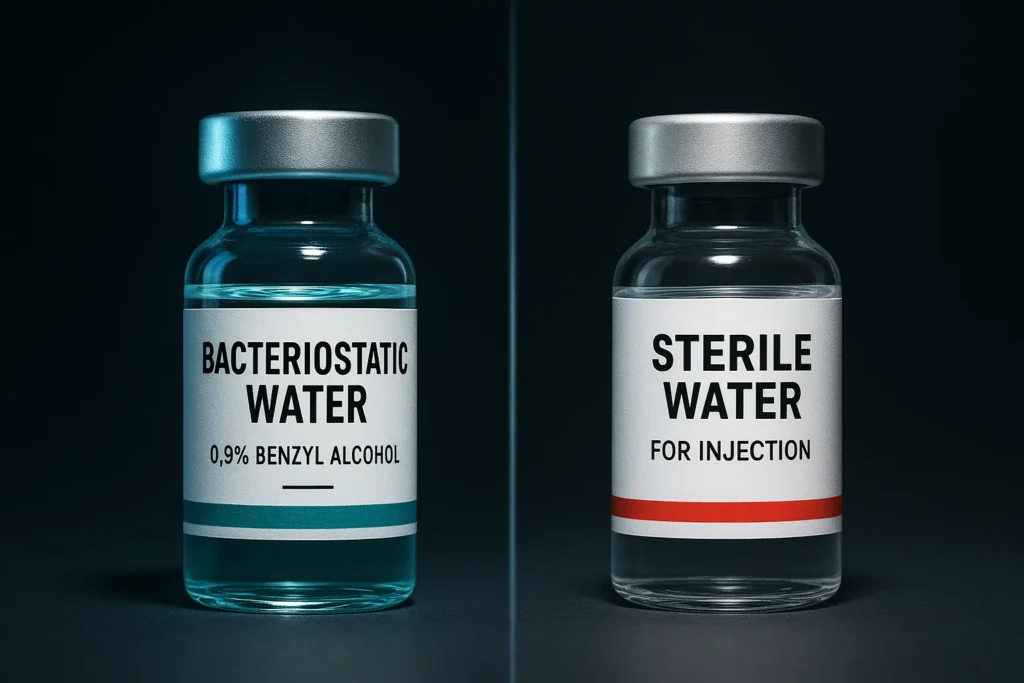
Bacteriostatic water is sterile water for injection that contains 0.9% benzyl alcohol as a preservative. The addition of benzyl alcohol helps inhibit the growth of certain bacteria after opening the vial. This preservative is one of the defining features of bacteriostatic water and distinguishes it from other sterile solutions that do not contain preservatives. The product complies with the quality standards established by the United States Pharmacopeia (USP), ensuring consistency in identity, purity, and sterility.
Saline is a sterile solution that contains sodium chloride dissolved in sterile water. The concentration of sodium chloride varies depending on the specific formulation, with 0.9% sodium chloride being one of the most commonly recognized pharmaceutical concentrations. Unlike bacteriostatic water, saline does not contain benzyl alcohol as part of its standard formulation. Instead, its primary ingredient, in addition to sterile water, is sodium chloride.
The most significant difference between these products is their composition. Bacteriostatic water contains sterile water and 0.9% benzyl alcohol, while saline contains sterile water and dissolved sodium chloride. Another important distinction is the presence of a preservative. Benzyl alcohol serves as a preservative in bacteriostatic water, whereas standard saline formulations generally do not include this ingredient. These differences give each product its own pharmaceutical identity and formulation characteristics.
Manufacturers package both bacteriostatic water and saline in sterile pharmaceutical containers and produce them according to recognized quality standards. Product labels typically include ingredient information, lot numbers, expiration dates, storage recommendations, and other identifying details. Clear labeling helps consumers distinguish between these two sterile products.
Bacteriostatic Water vs Saline highlights the important differences between these two sterile pharmaceutical products. Bacteriostatic water and saline are not the same product. Their ingredients, preservative content, and overall formulations differ, even though both are sterile pharmaceutical solutions. Understanding these scientific differences provides a clearer picture of each product’s composition while highlighting the importance of reading product labels and ingredient information carefully.
Use the Peptide Reconstitution Calculator to calculate peptide concentration and solution volume based on the amount of peptide and bacteriostatic water used in a laboratory preparation.
The calculator provides a convenient way to perform concentration calculations when bacteriostatic water is used in laboratory research. It can help researchers maintain consistency when determining solution concentrations and volumes according to their established laboratory procedures.
Formulas:
Concentration (mg/mL) = Peptide Amount (mg) ÷ BAC Water (mL)
Volume (mL) = Desired Amount (mg) ÷ Concentration (mg/mL)
Units = Volume (mL) × 100
Sign up and We'll Generate a Personal VIP Coupon Code That's Yours For Life — No Expiry, No Limits - Use it on Every Order.