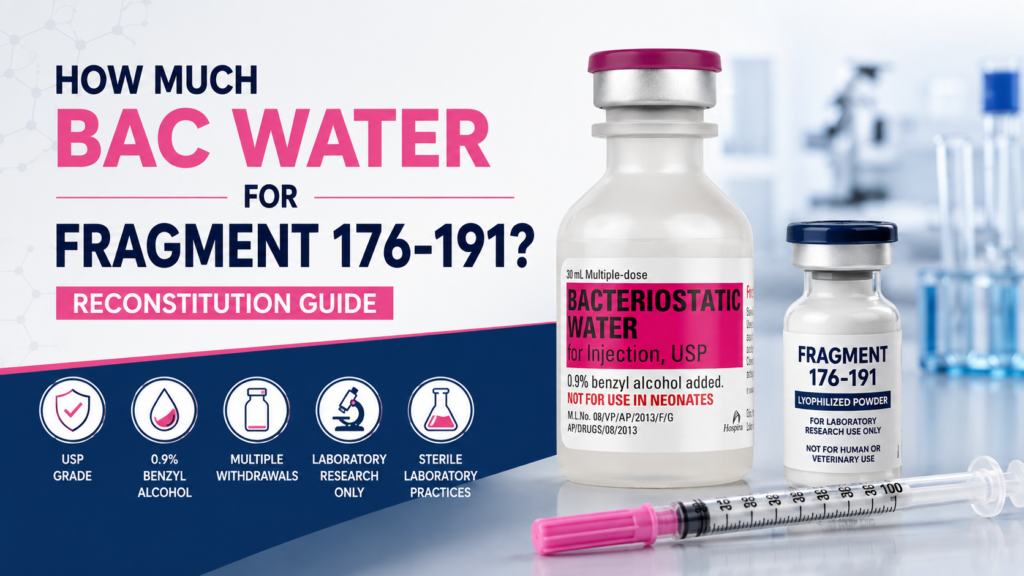
Fragment 176-191 is a synthetic research peptide that is commonly supplied as a lyophilized (freeze-dried) powder. Before it can be used in laboratory research, it must be reconstituted with a suitable sterile solution such as bacteriostatic water. One of the most common questions researchers ask is, “How much bac water should I add to Fragment 176-191?” The answer depends on the concentration required for your specific research protocol rather than a single fixed amount.
In research laboratories, common reconstitution volumes include 1 mL, 2 mL, or 5 mL of bacteriostatic water. Using a smaller volume creates a more concentrated solution, while adding a larger volume produces a more diluted solution. The ideal amount should be selected based on the concentration needed for accurate laboratory measurements and consistent experimental procedures.
To reconstitute Fragment 176-191, begin by disinfecting the rubber stoppers of both the peptide vial and the bacteriostatic water vial with an alcohol swab. Using a sterile syringe, slowly inject the bacteriostatic water down the inside wall of the peptide vial rather than directly onto the powder. This gentle technique helps protect the integrity of the lyophilized material. After the water has been added, gently swirl the vial until the powder has completely dissolved. Avoid shaking the vial vigorously, as excessive agitation may reduce peptide stability.
Use the Peptide Reconstitution Calculator to calculate peptide concentration and solution volume based on the amount of peptide and bacteriostatic water used in a laboratory preparation.
The calculator provides a convenient way to perform concentration calculations and helps researchers maintain consistency when preparing solutions for laboratory research.
Formulas:
Concentration (mcg/mL) = Peptide (mcg) ÷ BAC Water (mL)
Volume (mL) = Desired Amount (mcg) ÷ Concentration (mcg/mL)
Units = Volume (mL) × 100
Once reconstituted, label the vial with the preparation date and the final concentration. Store the solution under refrigerated laboratory conditions according to your facility’s standard operating procedures. Proper storage and careful handling help maintain the quality and consistency of research materials throughout their intended use.
Researchers should also ensure they are using high-quality bacteriostatic water from a trusted laboratory supplier. Maintaining sterile techniques during reconstitution and minimizing repeated punctures of the vial can help reduce the risk of contamination. Accurate concentration calculations and proper documentation also contribute to reliable and reproducible laboratory results.
Note: Bacteriostatic water and Fragment 176-191 are intended for laboratory and research use only. They are not intended for human or veterinary use. Always follow established laboratory protocols and your institution’s guidelines when handling and storing research materials.
Sign up and We'll Generate a Personal VIP Coupon Code That's Yours For Life — No Expiry, No Limits - Use it on Every Order.