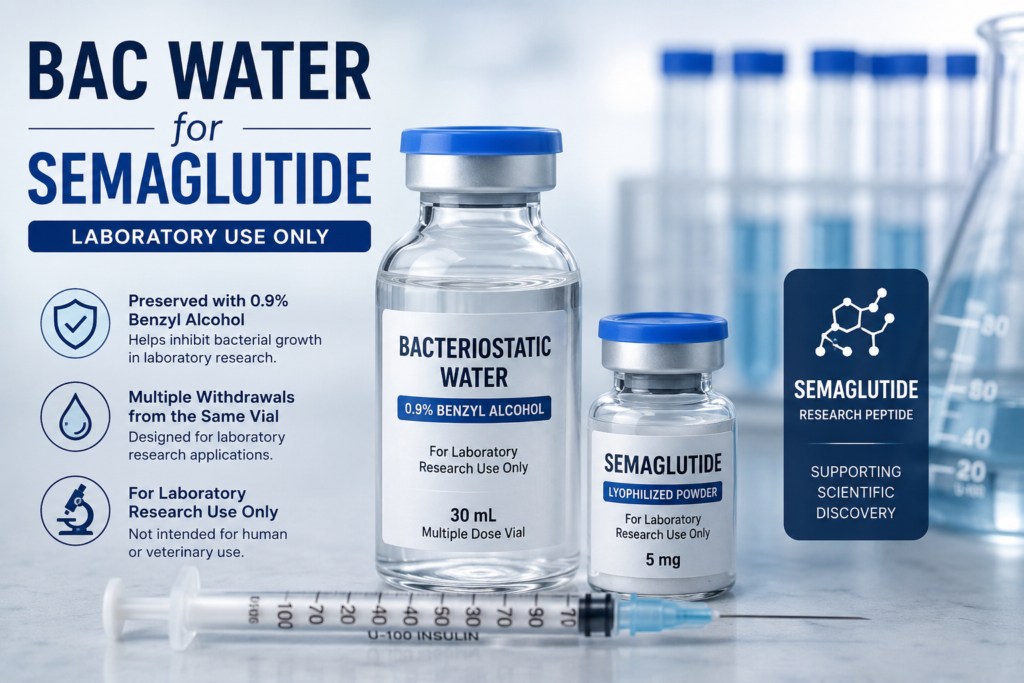
Semaglutide is a synthetic peptide widely studied in laboratory research, and one of the most frequently asked questions researchers have is how much bac water for semaglutide should be used during reconstitution. The appropriate amount of bacteriostatic water depends on several factors, including the peptide quantity, the target concentration, and the objectives of the research protocol. Because laboratory studies vary, there is no single reconstitution volume that applies to every experiment. Researchers should determine the appropriate dilution according to their laboratory procedures and the peptide manufacturer’s documentation.
Researchers commonly select bacteriostatic water for peptide reconstitution because it contains 0.9% benzyl alcohol, which helps inhibit bacterial growth after multiple withdrawals from the same vial. Proper sterile handling procedures help preserve the integrity of laboratory solutions throughout the research process. Using high-quality bacteriostatic water also supports consistent laboratory preparation and reliable experimental results.
Use the Peptide Reconstitution Calculator to calculate peptide concentration and solution volume based on the amount of Semaglutide and bacteriostatic water used in a laboratory preparation.
The calculator provides a convenient way to perform concentration calculations and helps researchers maintain consistency when preparing Semaglutide solutions for laboratory research.
Formulas:
Concentration (mg/mL) = Peptide Amount (mg) ÷ BAC Water (mL)
Volume (mL) = Desired Amount (mg) ÷ Concentration (mg/mL)
Units = Volume (mL) × 100
When determining the amount of BAC water for semaglutide, researchers should consider several important factors, including the peptide quantity, the desired concentration, and the precision required for laboratory measurements. Accurate calculations, proper documentation, and adherence to standard operating procedures help maintain consistency across research studies.
Researchers should also use sterile laboratory equipment throughout the preparation process and inspect all materials before use. Careful planning and standardized handling techniques contribute to reproducible laboratory outcomes while minimizing contamination risks.
After reconstitution, laboratories should lab semaglutide solutions according to the manufacturer’s recommendations and established laboratory protocols. Maintaining appropriate storage conditions, minimizing unnecessary vial punctures, and using sterile equipment help preserve sample quality throughout the research period. Researchers should also document preparation details to support consistency and traceability.
Understanding bac water for semaglutide begins with selecting appropriate laboratory supplies and following validated research procedures. Since every laboratory study has unique concentration requirements, researchers should determine the appropriate reconstitution volume based on their experimental design rather than relying on a universal formula. Using USP-grade bacteriostatic water, maintaining sterile techniques, and documenting each preparation help support consistent and reproducible laboratory research.
Note: Researchers should use bacteriostatic water and related laboratory products only for laboratory and research purposes. They should not use these products for human or veterinary applications.
Sign up and We'll Generate a Personal VIP Coupon Code That's Yours For Life — No Expiry, No Limits - Use it on Every Order.