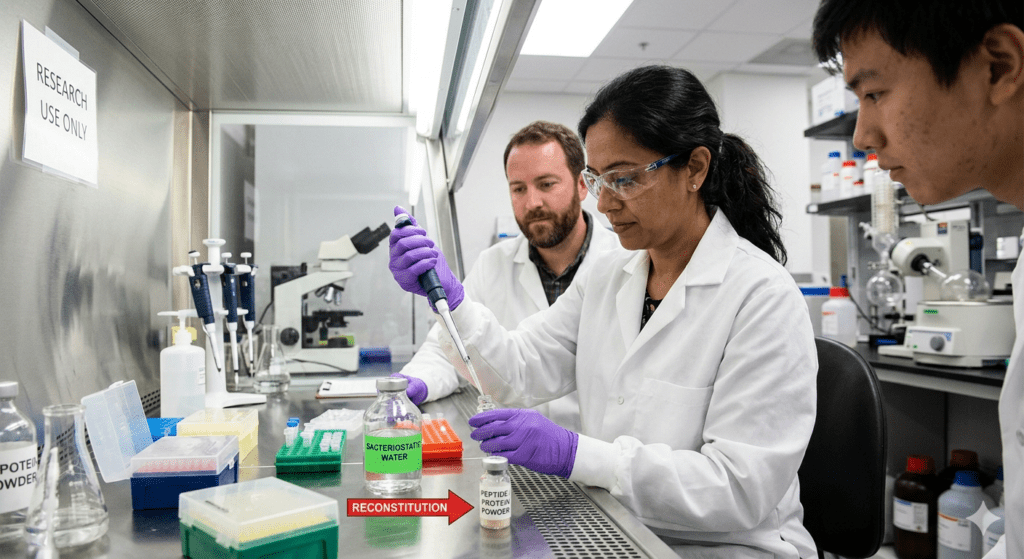
Many research materials are supplied in a dry or freeze-dried form to improve stability and storage conditions. Before these materials can be used in laboratory workflows, researchers may need to prepare them using an appropriate sterile solution. This preparation process is known as reconstitution. One commonly discussed laboratory solution for research reconstitution is bacteriostatic water.
Bacteriostatic water is sterile water containing 0.9% benzyl alcohol, a preservative that helps inhibit bacterial growth after opening. This feature allows it to support multi-dose laboratory applications when handled using appropriate sterile procedures.
Researchers use bacteriostatic water in controlled laboratory environments because it provides a practical solution for preparing certain research materials while maintaining workflow efficiency.
Understanding how bacteriostatic water supports reconstitution helps researchers better understand laboratory preparation practices and the importance of selecting appropriate research supplies. For laboratory-grade bacteriostatic water products: Explore Bacteriostatic Water Collection → https://bacteriostaticwaterlab.com/shop-bact-water/
Bacteriostatic water is a sterile solution designed with an added preservative component.
Its primary components include:
The benzyl alcohol functions as a bacteriostatic preservative, meaning it helps slow bacterial growth rather than acting as a sterilizing agent.
This makes bacteriostatic water different from standard sterile water, which does not contain preservatives.
Bacteriostatic water:
The exact suitability of any solution depends on the specific research material and laboratory protocol.
Researchers select reconstitution solutions based on several factors, including compatibility, handling requirements, and research procedures.
Bacteriostatic water is often considered because of its preservative properties and multi-dose capability.
Reconstitution requires careful preparation to maintain consistency.
Researchers focus on:
A suitable sterile solution helps support organized workflows.
One of the primary advantages of bacteriostatic water is that it is designed for repeated withdrawals when appropriate sterile techniques are followed.
This can provide convenience in laboratory settings where multiple preparation steps are required.
Laboratories often manage resources carefully.
Multi-dose solutions can help reduce waste compared with single-use alternatives in workflows where repeated access is needed.
Reconstitution is the process of adding a suitable liquid to a dry or concentrated research material to create a usable preparation for laboratory purposes. A general research workflow may involve:
Researchers typically begin by ensuring the working area is clean and organized.
Preparation may include:
The choice of reconstitution solution depends on:
Bacteriostatic water is one option used in certain research environments.
Sterile handling is essential throughout laboratory procedures. Researchers focus on reducing contamination risks through appropriate techniques and equipment. For information about laboratory biosafety principles, researchers can review resources from: World Health Organization Laboratory Biosafety Manual
Researchers can use the Peptide Reconstitution Calculator as a supplementary mathematical reference when working with research reconstitution calculations. The calculator helps researchers determine the resulting concentration based on the total research material amount and the volume of bacteriostatic water used.
The calculator uses basic concentration calculations:
Concentration = Total Amount ÷ Bacteriostatic Water Volume
Researchers can enter the relevant values into the calculator to simplify concentration calculations and support consistent laboratory documentation.
The calculator provides a convenient reference for mathematical calculations during research workflows. However, researchers should always confirm the appropriate reconstitution solution and procedure using the specific research material’s documentation and established laboratory protocols.
Note: The Peptide Reconstitution Calculator is provided for laboratory and research reference purposes only. It does not provide medical dosing recommendations and does not replace product-specific instructions or established laboratory procedures.
Research workflows often require consistency and reliability.
Bacteriostatic water may support these workflows by providing:
Sterile solutions are important components of controlled laboratory procedures.
Multi-dose capability can help laboratories organize preparation activities more efficiently.
Using reliable supplies supports repeatable research procedures.
The presence of benzyl alcohol helps support repeated access when proper handling procedures are followed.
Researchers may benefit from having a flexible sterile solution available for certain workflows.
Reliable laboratory materials help researchers maintain organized and consistent processes.
Successful research reconstitution depends on careful preparation, appropriate materials, and consistent laboratory practices.
Although bacteriostatic water provides a sterile solution with preservative properties, researchers should still follow established laboratory procedures to maintain quality and reliability.
A properly organized workspace helps reduce unnecessary risks during laboratory procedures.
Good preparation practices include:
A controlled environment supports better consistency during preparation procedures.
The quality of laboratory equipment plays an important role in research workflows.
Researchers commonly focus on:
Using reliable laboratory supplies helps maintain consistent procedures. Research Laboratory Supplies → https://bacteriostaticwaterlab.com/shop-bact-water/
Bacteriostatic water contains benzyl alcohol, which helps inhibit bacterial growth, but it does not replace careful handling.
Researchers should maintain appropriate practices such as:
Sterile technique remains one of the most important factors in maintaining research quality.
Researchers may encounter different types of sterile solutions depending on their laboratory requirements.
The main differences often involve:
Characteristics:
Characteristics:
Some research procedures may require different solutions depending on:
Researchers should always select materials according to their specific protocols. For scientific information about laboratory preparation and research methods, researchers can explore: Nature Portfolio
Proper storage helps maintain the quality of bacteriostatic water before and during laboratory use.
Recommended practices include:
Once opened, careful handling becomes even more important.
Researchers should consider:
A vial should be inspected before use.
Avoid products showing:
Product inspection is an important quality control step.
Selecting a trustworthy supplier helps researchers obtain consistent laboratory materials.
When evaluating suppliers, consider:
Reliable suppliers should provide:
Important packaging considerations include:
Good packaging helps protect products during transportation and storage.
Professional suppliers should provide:
Bacteriostatic Water Lab provides laboratory-focused products designed for research environments.
Research depends on consistency.
The quality of laboratory supplies can influence:
Researchers often prioritize suppliers that provide transparent information and reliable products.
Scientific organizations such as the National Research Council publish resources related to research practices and scientific standards.
External Resource:
National Research Council Publications
Bacteriostatic water is commonly used as a sterile solution in research workflows where controlled preparation and reconstitution procedures are required.
Researchers may choose bacteriostatic water because it contains benzyl alcohol, which provides preservative properties and supports multi-dose applications.
The main difference is that bacteriostatic water contains 0.9% benzyl alcohol, while sterile water does not contain preservatives.
No. Proper laboratory handling remains essential even when using bacteriostatic water.
Benzyl alcohol acts as a bacteriostatic preservative that helps inhibit bacterial growth after opening.
It should be labd according to manufacturer recommendations in a clean environment protected from unsuitable temperatures and direct exposure.
Researchers should consider product information, packaging quality, supplier reliability, and research suitability.
No. The appropriate solution depends on the specific research material, protocol requirements, and laboratory procedures.
Bacteriostatic water for reconstitution plays an important role in many research laboratory workflows.
Its unique formulation, including 0.9% benzyl alcohol, provides preservative properties that support multi-dose applications when appropriate handling procedures are followed.
Researchers choose bacteriostatic water because it offers:
However, proper storage, sterile handling, and following laboratory protocols remain essential.
By understanding how researchers use bacteriostatic water for reconstitution, laboratories can make better decisions when selecting research supplies.
For high-quality laboratory products: Explore Bacteriostatic Water Lab Products: https://bacteriostaticwaterlab.com/shop-bact-water/
Sign up and We'll Generate a Personal VIP Coupon Code That's Yours For Life — No Expiry, No Limits - Use it on Every Order.