Many researchers ask, “Why does bacteriostatic water contain preservatives?” Understanding the purpose of these preservatives helps explain why bacteriostatic water differs from standard sterile water. Bacteriostatic water is a sterile, non-pyrogenic solution that contains a small amount of benzyl alcohol. A preservative that helps inhibit bacterial growth after researchers puncture the vial. This characteristic makes bacteriostatic water suitable for laboratory procedures that involve multiple withdrawals from the same vial while following appropriate handling practices.
The preservative in bacteriostatic water helps slow the growth of certain bacteria that researchers may introduce after opening the vial. It does not sterilize contaminated solutions or replace proper laboratory techniques. It provides an additional layer of protection when researchers access the vial multiple times during laboratory procedures.
This feature distinguishes bacteriostatic water from preservative-free sterile water, which laboratories generally use for single-use applications.
Bacteriostatic water contains benzyl alcohol as its preservative. The formulation includes it in a small concentration to help inhibit bacterial growth within the vial after repeated withdrawals. Laboratories should continue to follow proper aseptic handling techniques, as the preservative does not eliminate the need for careful product handling.
Many laboratory workflows require researchers to withdraw small amounts of solution from the same vial over multiple sessions. The preservative helps support these repeated withdrawals when laboratories follow appropriate storage recommendations and handling procedures.
Researchers should always inspect the vial before use, verify the expiration date, and lab the product according to the instructions provided on the label.
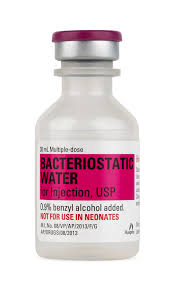
The product label identifies important information, including the presence of benzyl alcohol, storage recommendations, lot number, expiration date, and intended laboratory use. Reading the label before use helps laboratories handle the product according to its intended purpose.
Understanding why bacteriostatic water contains preservatives, researchers recognize the role of benzyl alcohol in supporting repeated withdrawals from the same vial. Although the preservative helps inhibit bacterial growth. Laboratories should continue following proper storage recommendations, aseptic handling practices, and product label instructions to maintain consistent research procedures.
Note: Laboratories and researchers should use bacteriostatic water only for laboratory and research purposes. They should not use it for human or veterinary applications.
Sign up and We'll Generate a Personal VIP Coupon Code That's Yours For Life — No Expiry, No Limits - Use it on Every Order.