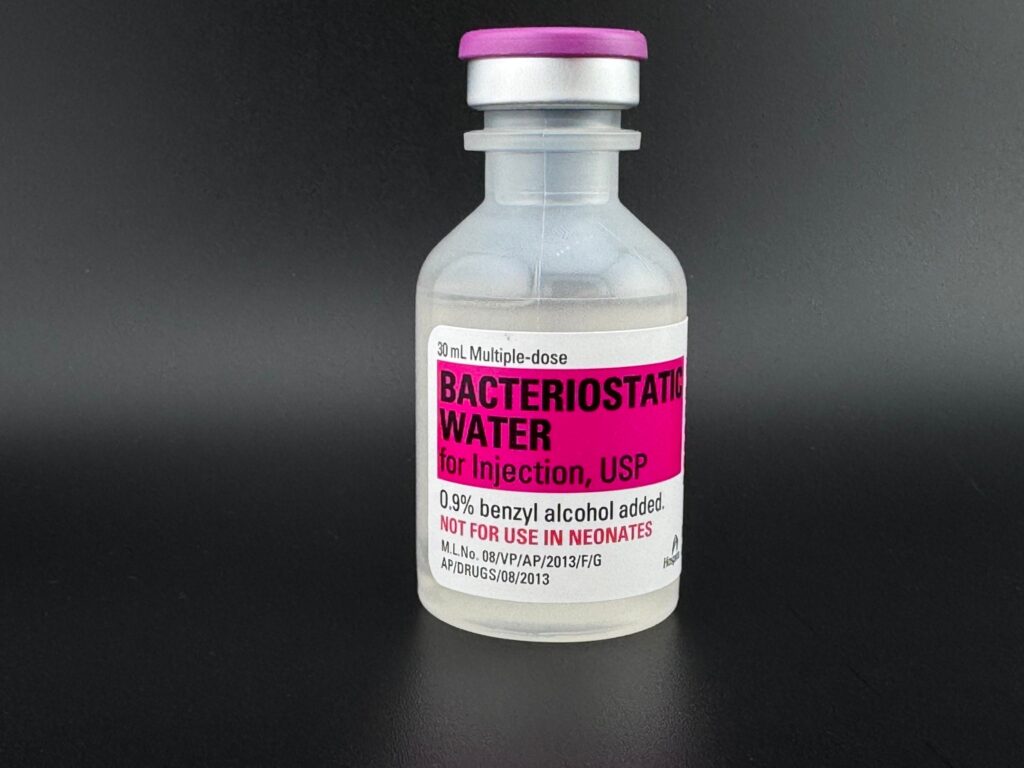
Many researchers ask, “Can bacteriostatic water become contaminated?” Although bacteriostatic water contains a preservative that helps inhibit bacterial growth after multiple withdrawals, no laboratory product is completely immune to contamination. Proper handling, storage, and routine inspection play important roles in maintaining the quality and integrity of bacteriostatic water throughout its intended use in laboratory research.
Bacteriostatic water contains a small amount of benzyl alcohol, which helps inhibit the growth of certain bacteria after researchers puncture the vial. However, the preservative does not eliminate all contamination risks or replace proper laboratory handling procedures. Researchers should continue to follow established laboratory practices whenever they handle sterile solutions.
Several factors can increase the possibility of contamination during laboratory use. Frequently touching the rubber stopper with unclean materials, leaving the vial exposed to the environment, or storing the product under unsuitable conditions may affect its quality. Following proper handling procedures helps reduce these risks and supports consistent laboratory operations.
Researchers should lab bacteriostatic water according to the instructions provided on the product label. Keeping the vial in a clean, temperature-controlled environment and protecting it from excessive heat, freezing temperatures, and direct sunlight helps preserve its condition. Laboratories should also replace the protective cap after each use and inspect the vial for visible damage or discoloration before handling it.
Before each use, researchers should review the expiration date and inspect the vial for cracks, leaks, discoloration, or other visible signs that may indicate the product is no longer suitable for laboratory use. Maintaining accurate inventory records also helps laboratories rotate stock efficiently and reduce the use of outdated products.
Understanding bacteriostatic water contamination helps researchers recognize the importance of proper laboratory handling and storage practices. Although the preservative helps inhibit bacterial growth, laboratories should continue following established procedures, storing products correctly, and inspecting each vial before use to help reduce the risk of contamination and support consistent research environments.
Note: Laboratories and researchers should use bacteriostatic water only for laboratory and research purposes. They should not use it for human or veterinary applications.
Sign up and We'll Generate a Personal VIP Coupon Code That's Yours For Life — No Expiry, No Limits - Use it on Every Order.