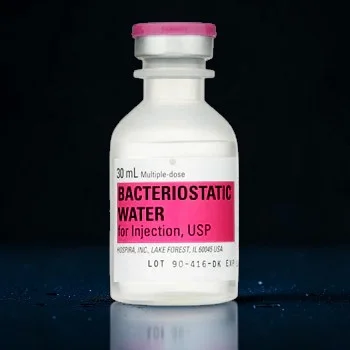
Researchers commonly use Hospira bacteriostatic water in laboratory and research settings, leading them to ask questions about its composition, storage, and quality standards. Understanding these topics helps laboratories select appropriate research materials and follow established handling practices. The following answers address some of the most frequently asked questions about Hospira bacteriostatic water for research.
Hospira bacteriostatic water for research is sterile water for injection that contains 0.9% benzyl alcohol as a bacteriostatic preservative. The preservative helps inhibit bacterial growth after researchers puncture the vial, allowing them to perform multiple withdrawals while following proper aseptic techniques.
This feature distinguishes it from preservative-free sterile water, which laboratories typically use for single-use applications.
Researchers use Hospira bacteriostatic water in laboratory environments because it provides a standardized sterile solution that supports multiple withdrawals from the same vial when handled correctly. Its consistent formulation and compliance with recognized quality standards make it suitable for a wide range of research workflows that require sterile laboratory supplies.
Manufacturers produce Hospira bacteriostatic water in compliance with United States Pharmacopeia (USP) specifications for sterility and composition. Products that meet these recognized standards provide laboratories with consistent quality and clear product documentation, supporting reliable scientific practices and quality assurance procedures.
Researchers should lab Hospira bacteriostatic water according to the manufacturer’s recommendations. Typically at controlled room temperature and away from direct sunlight, excessive heat, and freezing conditions. Laboratories should also inspect each vial before use and avoid using products with damaged packaging or signs of contamination.
The primary difference is the presence of 0.9% benzyl alcohol. This preservative helps inhibit bacterial growth after researchers open the vial, allowing them to perform multiple withdrawals while following proper aseptic handling techniques. In contrast, researchers generally use preservative-free sterile water for single-use applications because it does not contain a bacteriostatic preservative.
Use the Peptide Reconstitution Calculator to calculate peptide concentration and solution volume based on the amount of peptide and bacteriostatic water used in a laboratory preparation.
The calculator provides a convenient way to perform concentration calculations and helps researchers maintain consistency when preparing peptide solutions with bacteriostatic water. Researchers should use the calculator alongside product documentation and established laboratory procedures when planning research preparations.
Formulas:
Concentration (mg/mL) = Peptide Amount (mg) ÷ BAC Water (mL)
Volume (mL) = Desired Amount (mg) ÷ Concentration (mg/mL)
Units = Volume (mL) × 100
Note: This article is intended for educational and scientific purposes only. It provides general information about Hospira bacteriostatic water for laboratory research and should not be interpreted as medical or clinical guidance.
Sign up and We'll Generate a Personal VIP Coupon Code That's Yours For Life — No Expiry, No Limits - Use it on Every Order.