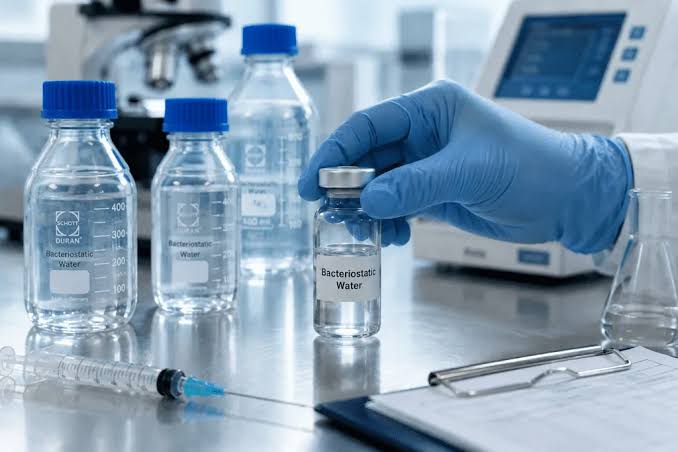
Bacteriostatic water plays an important role in laboratory and research environments where consistency and product quality are essential. Before laboratories use a vial for research applications, manufacturers evaluate it through a series of quality control procedures. Understanding bacteriostatic water quality testing helps researchers recognize how manufacturers verify that each batch meets established standards.
Quality testing helps confirm that bacteriostatic water meets defined specifications for purity, sterility, and consistency. These evaluations reduce variability between production batches and support reliable laboratory research. By following standardized testing procedures, manufacturers can verify that each product aligns with recognized quality requirements before distribution.
One of the most important aspects of bacteriostatic water quality testing is sterility verification. Manufacturers test samples to confirm that the product remains free from viable microorganisms after production. Sterility testing follows established laboratory procedures designed to detect microbial contamination while maintaining controlled testing conditions.
Manufacturers also evaluate the chemical composition of bacteriostatic water. These analyses verify that the water meets purity specifications and that the preservative concentration remains within the required range. Consistent chemical composition supports product uniformity across different manufacturing batches.
Every production batch typically undergoes visual inspection before release. Quality control personnel examine each vial for clarity, color, particulate matter, container integrity, labeling accuracy, and proper sealing. Any product that fails to meet established quality standards does not proceed for distribution.
Quality testing extends beyond the finished product. Manufacturers monitor production equipment, environmental conditions, and filling processes throughout the manufacturing process. Controlled production environments, validated equipment, and documented procedures help maintain consistency from one batch to the next.
Many manufacturers also maintain detailed batch records and lot tracking systems to support quality assurance and product traceability.
Bacteriostatic water quality testing involves multiple evaluations, including sterility verification, chemical analysis, physical inspection, and manufacturing quality controls. Together, these procedures help confirm that each batch meets established quality standards for laboratory research. Understanding how manufacturers test bacteriostatic water provides valuable insight into the quality assurance practices that support the consistent and reliable production of scientific research products.
Note: Bacteriostatic water is intended for laboratory and research use only. Researchers should always review product specifications, storage recommendations, and applicable quality documentation before use in laboratory settings.
Sign up and We'll Generate a Personal VIP Coupon Code That's Yours For Life — No Expiry, No Limits - Use it on Every Order.